
The Best Robotic Mowers of CES 2026: A Complete Buyer’s Guide
)
CES 2026 NEWS – Robotic mowers are not just getting smarter. They are finally getting practical. CES 2026 delivered 17 new models from 10 brands, and the technology gap between interesting concept and ready for your yard has essentially closed. Wire free installation is now standard. AWD and 4WD drivetrains dominate. Two models walked away with CES Innovation Awards. If you have been waiting for robotic mowers to mature, that wait is over.
If 2025 was about proving robotic mowers could work, 2026 is about proving they are ready to replace traditional lawn care for a much broader audience.
This is a living guide. We will keep updating it throughout the year as we test and review these robotic lawn mowers, confirm real world performance, and track pricing changes and sales.
What Changed From 2025 to 202620252026Boundary wires commonWire free is standardSingle navigation methodMulti layered redundancy (RTK + Vision, LiDAR + cameras)AWD or 4WD as a premium featureAWD or 4WD across all price tiers30 to 40 percent slope maxUp to 84 percent slope claimsCommercial meaning bigger residentialTrue commercial and residential segmentationConcepts as noveltyConcepts as near term roadmap (robotic arms, modular platforms)The industry reached consensus: boundary wires are dead, navigation must be redundant, traction matters as much as intelligence, and setup friction kills adoption.
How to Choose Your Robotic Mower
Before diving into specific models, map your yard to the right tech.
1. Lawn SizeSmall (under 0.25 acres): Entry level models work fine. Segway i2 series, NexLawn VIDAR 800.
Medium (0.25 to 0.75 acres): Mid range sweet spot. Segway H2, NexLawn VIDAR 3200, GOKO M6, most CES announcements target this range.
Large (0.75 to 1.5 acres): Flagship territory. NexLawn NAVIA 6000, Segway X4, Airseekers Tron Ultra.
Commercial (1.5 plus acres): Dedicated commercial units. Segway Terranox (3 to 6 acres), Pandag G1 (12 acres per day).
2. TerrainFlat yard: RWD is fine. Save money with Segway i2 LiDAR, Roborock RockMow X1, or Lymow One Plus.
Moderate slopes (up to 45 percent): AWD recommended. Segway i2 AWD, H2 Series, iGarden L AWD.
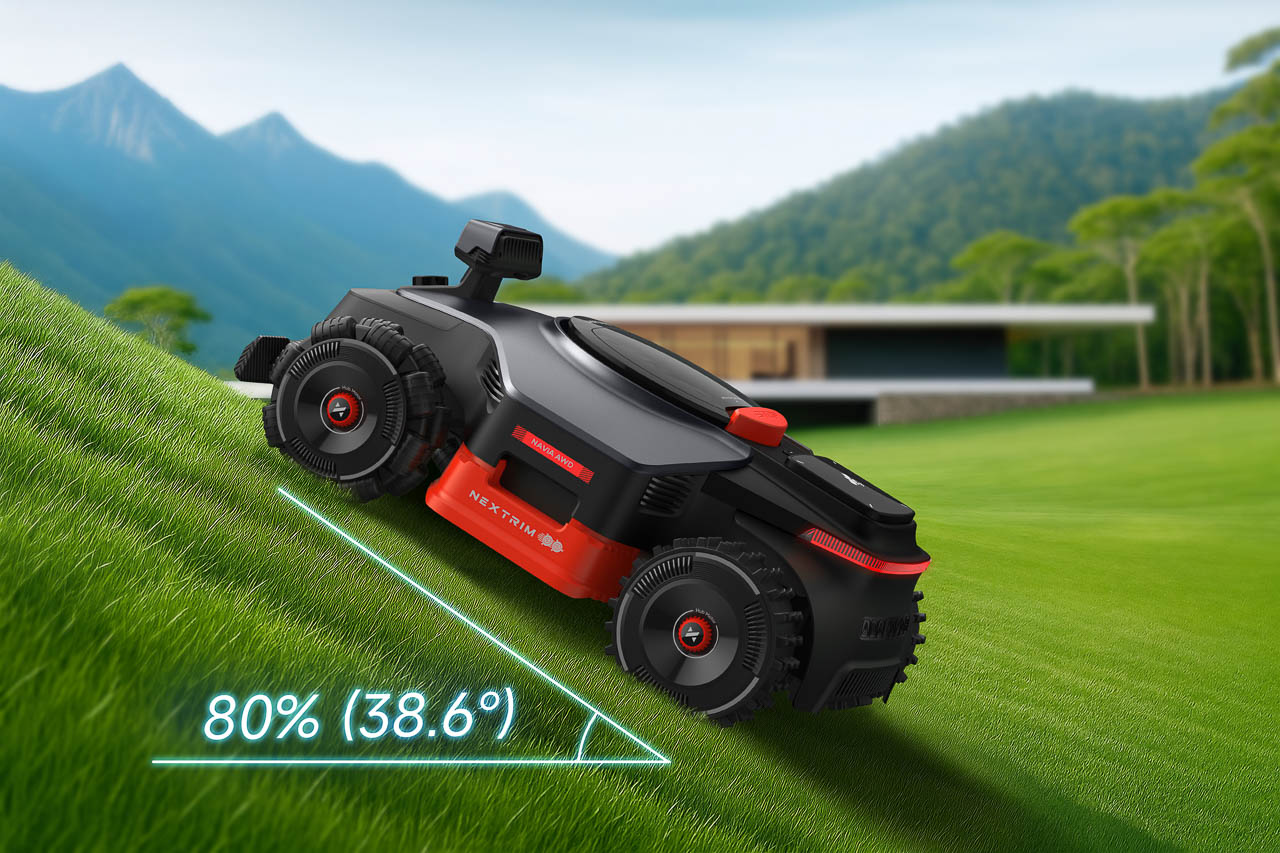
Steep and complex terrain (45 percent plus): 4WD required. Segway X4 (84 percent), Yarbo M Series (70 percent), GOKO M6.
Open sky: RTK based navigation works great. Best accuracy and fastest mapping.
Heavy tree cover: LiDAR or vision plus beacon systems handle canopy better. Segway i2 LiDAR, Airseekers Tron Ultra (beacon system), Lymow One Plus (pure vision).
Mixed conditions: Hybrid navigation (RTK + LiDAR or RTK + Vision) provides redundancy. Segway H2, NexLawn lineup.
4. Setup ToleranceI want zero fuss: Drop and mow LiDAR systems. Segway i2 LiDAR (under 5 minute setup).
I will do guided mapping: RTK + Vision systems with app based boundary drawing. Most 2026 models.
I need precision for complex property: Beacon augmented systems. Airseekers Tron Ultra.
5. Support ChannelRetail (safest): Segway i2 LiDAR at Lowe’s. Walk in support and easy returns.
Direct to consumer: NexLawn, GOKO, Roborock, iGarden. Standard warranty but online only.
Crowdfunded (highest risk): Airseekers (Kickstarter April 2026), Yarbo M Series (Kickstarter post CES). Early adopter pricing but delivery uncertainty.
Quick Picks🏆 Best Budget AWD: Segway i 206 (999 dollars). Small lawns, 45 percent slope, zero turn capability, Network RTK. The new price floor for AWD.
⛰️ Best for Slopes: Segway X4 Series. 84 percent slope capability, 4WD, RTK + Vision, automatic gate system.
🏠 Best for Large Residential: NexLawn NAVIA 6000 AWD. 1.5 acres, NexNav triple sensor positioning, pet safe detection.
✨ Best Drop and Mow Simplicity: Segway i2 LiDAR Series. Solid state LiDAR, under 5 minute setup, available at 500 plus Lowe’s stores.
🏭 Best Commercial Scale: Pandag G1. 12 acres per day, RTK + 4WD, fleet management ready.
🔮 Most Innovative and Watchlist: Yarbo M Series. Modular platform: mowing, snow, leaves, trimming. Tracked chassis, 70 percent slopes. Kickstarter risk but high upside.
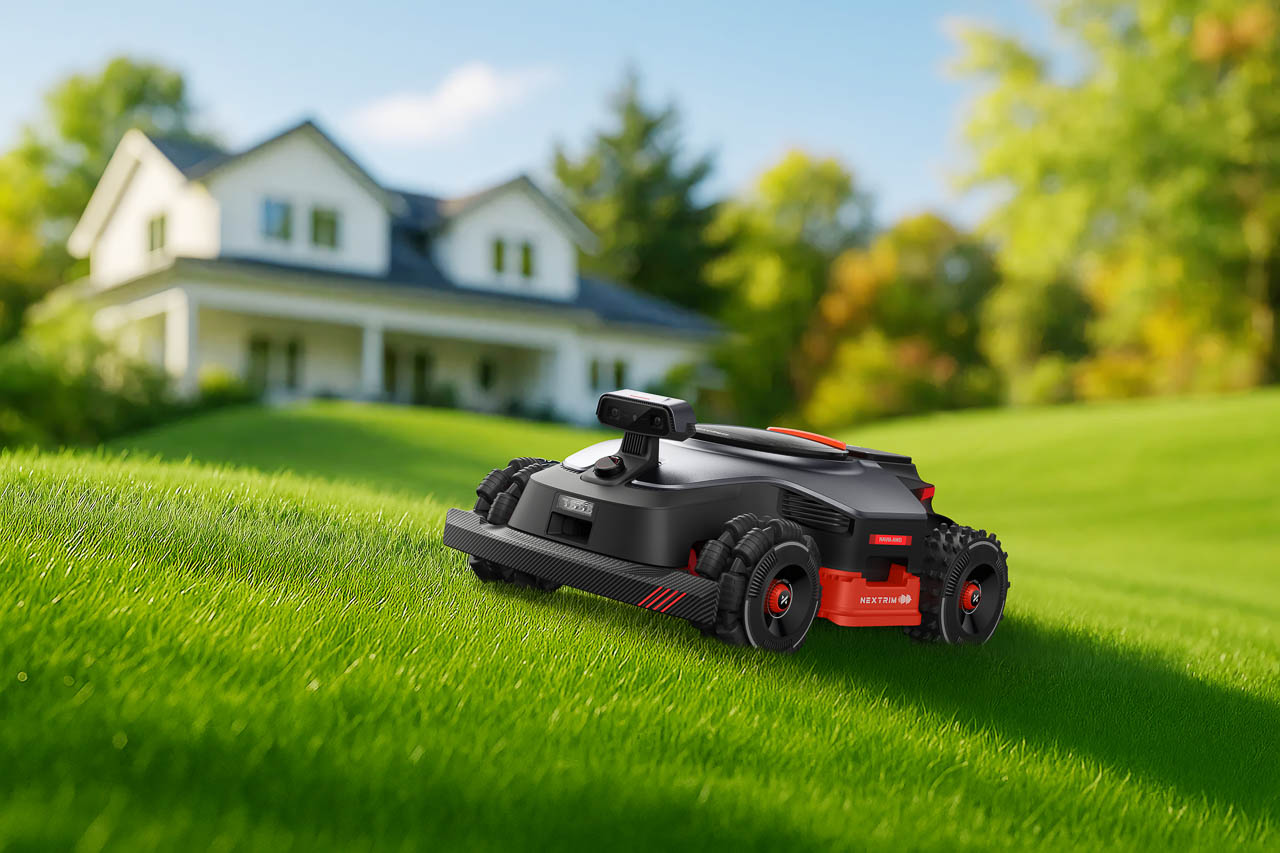
The flagship builds on three core technologies: NexNav for positioning, NexDrive 4WD for all terrain performance, and NextTrim for edge cutting precision. Pet safe obstacle detection comes standard, addressing a common concern for households with dogs or cats that share yard space with autonomous equipment. The wire free, fully autonomous operation eliminates the boundary wire installation that plagued earlier robotic mower generations.
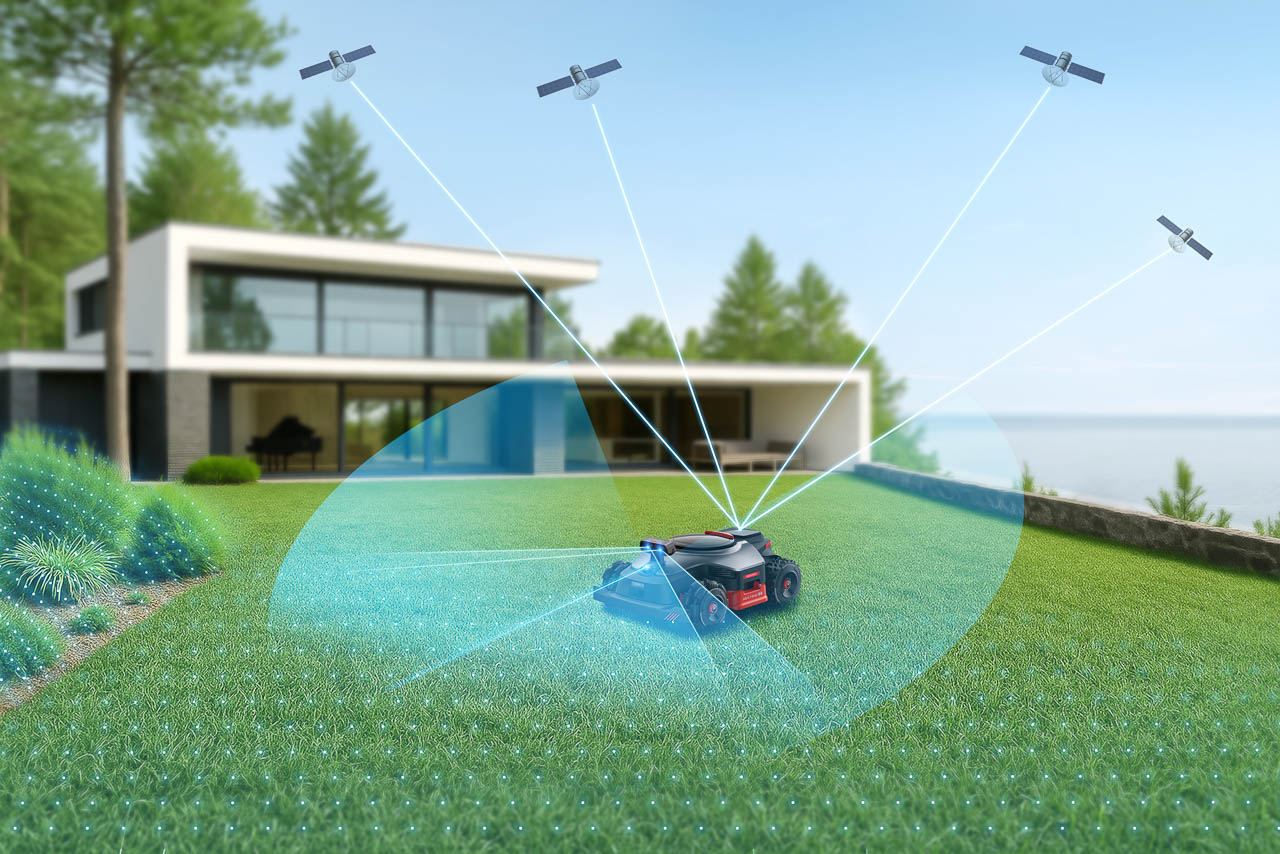
The VIDAR series fills out the mid range and entry tiers. The VIDAR 3200 AWD handles up to 0.8 acres with the same navigation stack as its bigger sibling, which means you are getting flagship level intelligence in a smaller package. The VIDAR 800 drops to rear wheel drive and targets yards under 0.2 acres, making it the most accessible entry point into the NexLawn ecosystem. All three share the NexNav navigation approach and intelligent zone management, so the core smarts remain consistent regardless of which model fits your property.
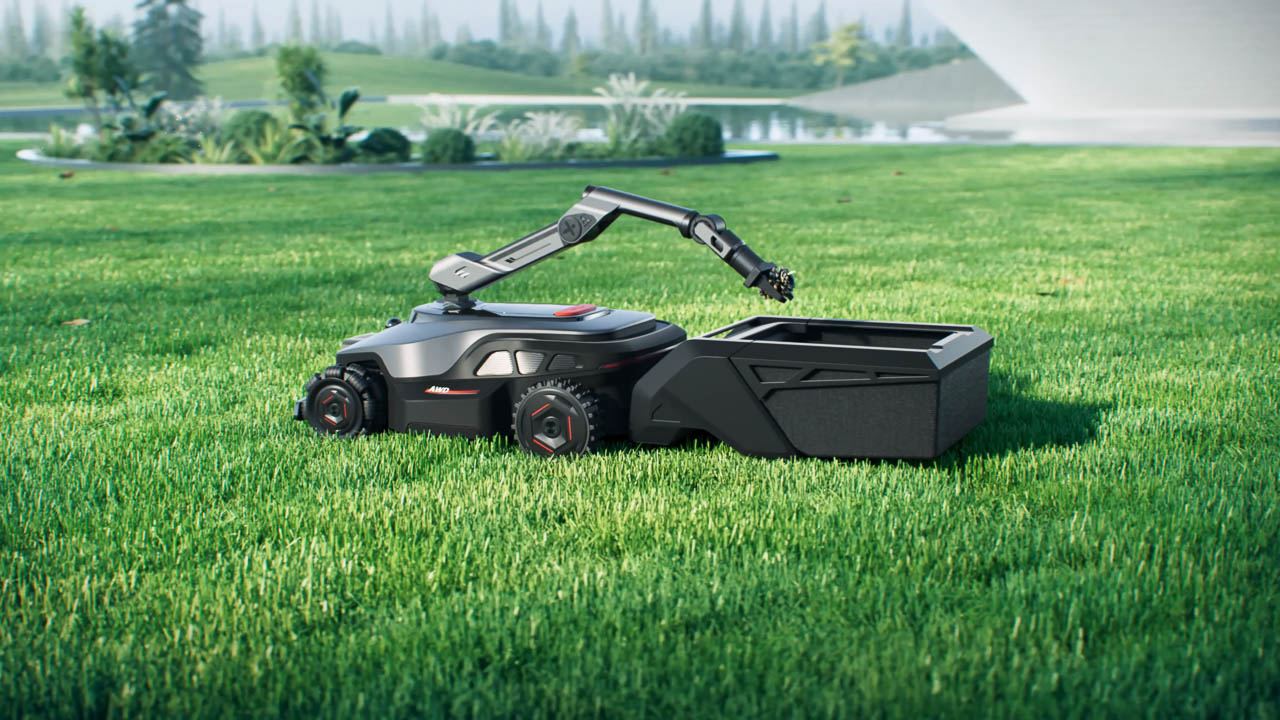
The Master X Concept is worth a mention even though it will not hit lawns anytime soon. NexLawn showed a multifunctional robotic mower with an integrated robotic arm capable of debris clearing, edging, weeding, and even watering. Using pure AI vision navigation, the Master X previews where yard care robotics could head in the next few years: machines that handle obstacles rather than just avoid them.
Segway Navimow: The Broadest LineupSegway brought five distinct series to CES at Booth 9615A in North Hall, covering everything from compact residential units to commercial grade machines. If you want the deep dive on their hybrid navigation approach, start with the H2 Series. With 400,000 units sold globally and a successful X3 series launch behind them, the 2026 lineup represents Segway’s most ambitious push into the North American market. Pre orders open January 16, 2026.
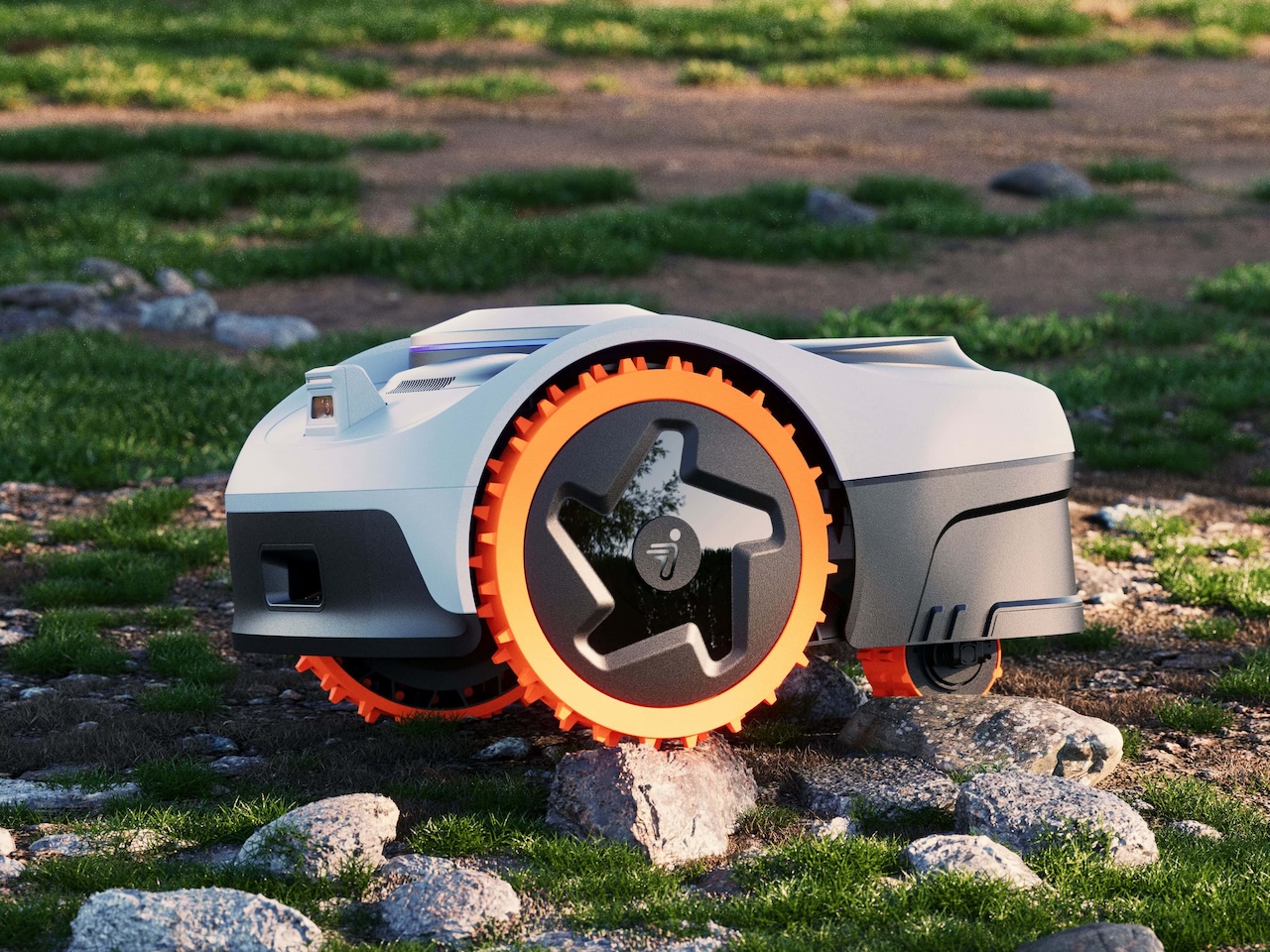
The technology underpinning the new lineup addresses the three pain points that have historically limited robotic mower adoption: installation complexity, navigation capability, and terrain handling. Segway’s new solid state LiDAR delivers nearly 200,000 points of view across 96 beams, built directly into the mower rather than mounted externally for improved durability. Network RTK eliminates the physical reference antenna entirely. Installation time drops from the traditional 5 to 6 hours to under 5 minutes in some cases. The new GeoSketch mapping feature provides intuitive 3D boundary setup through the app.
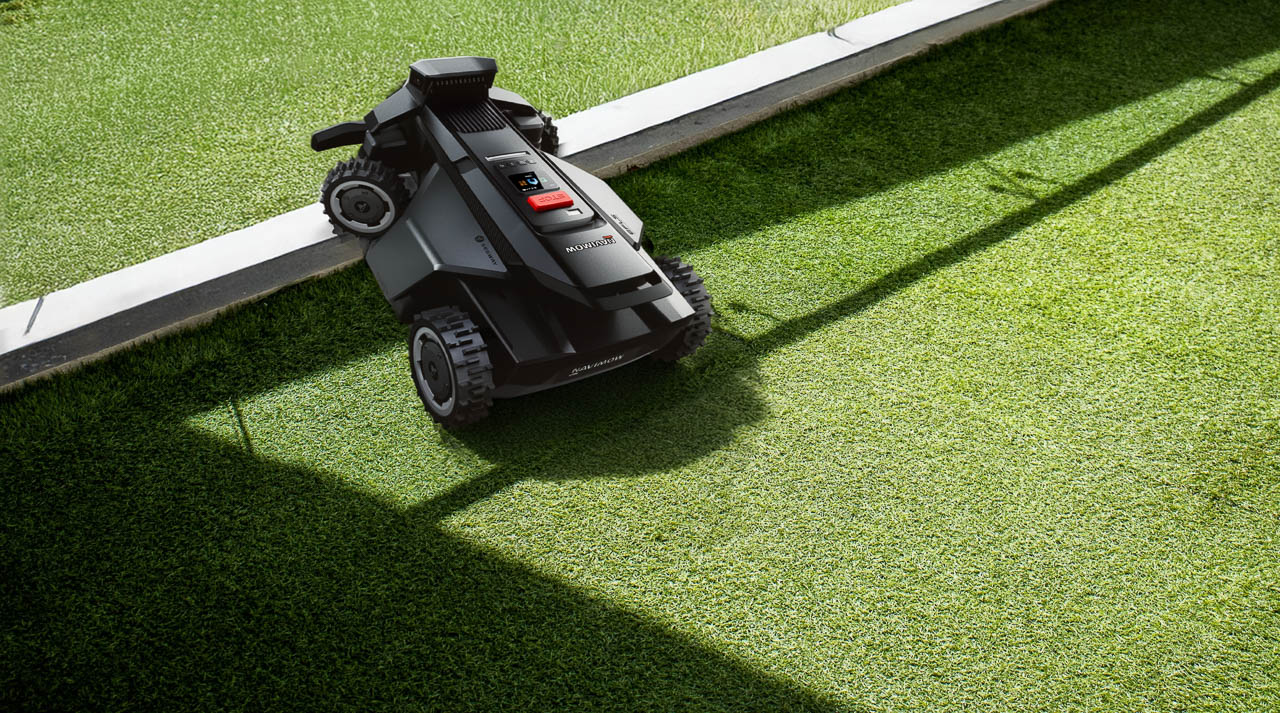
The X4 Series targets large residential lawns with RTK plus vision navigation and true 4WD capability. The standout spec is 84 percent slope handling with dual sided razor blades. An automatic gate system, demoed at the CES booth, allows the X4 to pass between front and back yards autonomously.
The i2 AWD Series uses a three wheel system with a 180 degree pivoting third wheel for zero turn capability that prevents lawn damage during direction changes. Slope handling reaches 45 percent with 1.6 inch step climbing ability. Two models launch at aggressive price points: the i 206 covers 0.15 acres for 999 dollars and the i 210 handles 0.25 acres for 1,299 dollars.
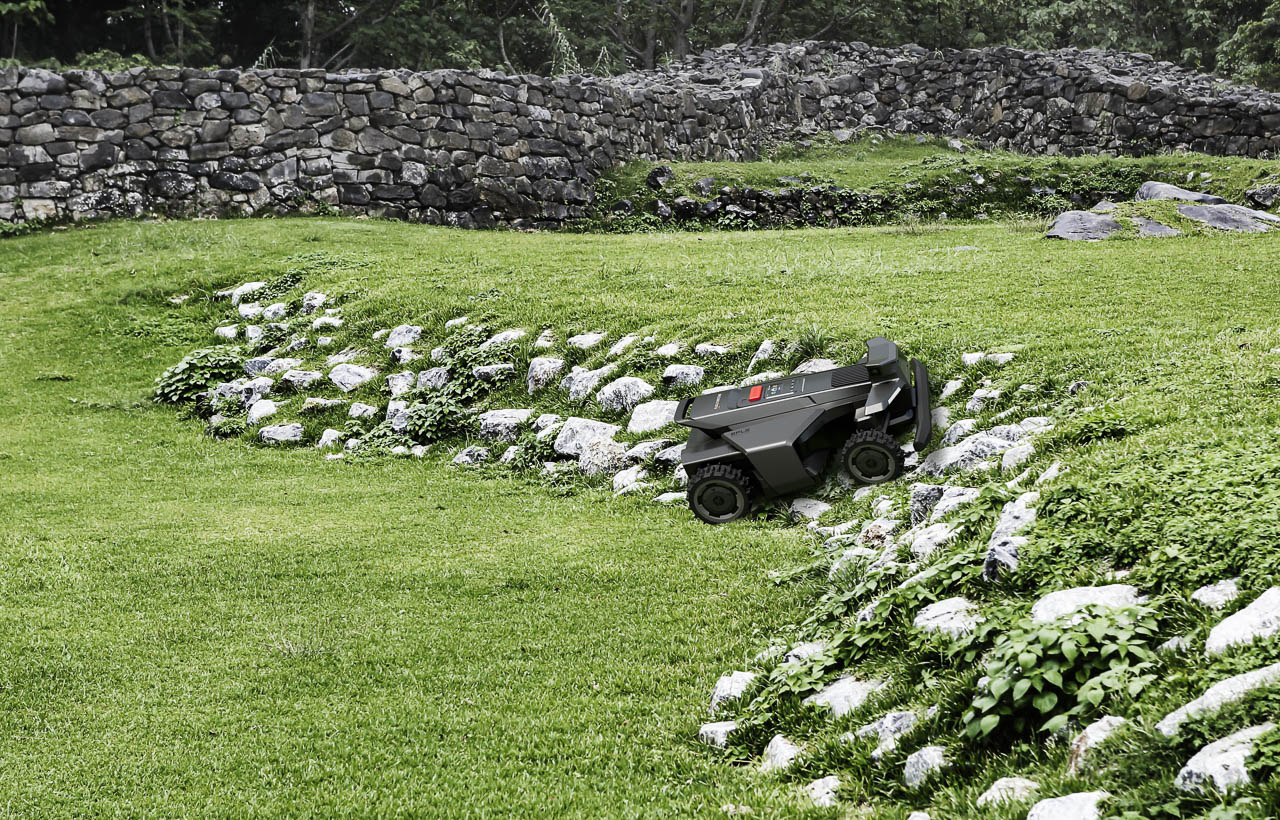
The i2 LiDAR Series delivers drop and mow simplicity. The built in solid state LiDAR excels in confined spaces, narrow passageways, and areas with heavy tree coverage where GPS signals struggle. The i 215 covers 0.37 acres and represents Segway’s push into mainstream retail. It will appear in over 500 Lowe’s stores nationwide.
The H2 Series combines LiDAR and Network RTK for performance in both complex and open yards. A terrain adaptive system optimizes mowing paths on slopes, with 45 percent slope capability and electronic stability control. The H210 covers 0.25 acres while the H220 handles 0.5 acres.
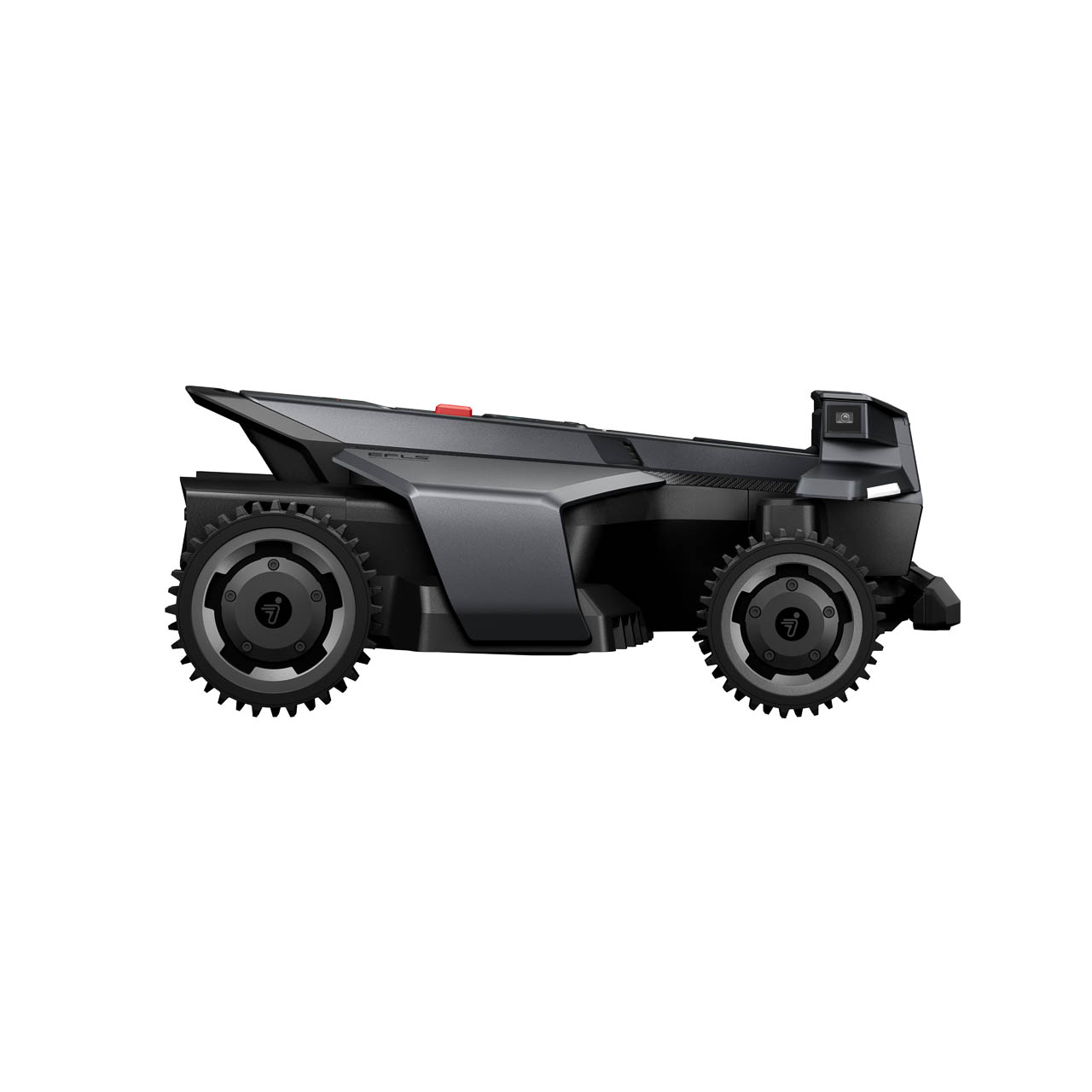
The Terranox Series moves into commercial territory with 3 acre and 6 acre units featuring 4WD and a fleet management app platform for real time analytics across multiple machines. All series include smart home integration with Alexa and Google Home, plus anti theft capabilities.
The Standouts: Innovation Award Winners and Best of CES ContendersRoborock’s entry into robotic mowers earned immediate recognition. The RockMow X1 LiDAR took home a CES Innovation Award, and the award listing calls out all wheel drive, Active Steering, dynamic suspension, and full 360 degree LiDAR scanning with six blades and edge trimming. This is a traction forward mower built around the same mapping first mindset that made Roborock a leader in robot vacuums.
Roborock also teased a broader North American rollout beyond the X1 LiDAR, naming the RockMow X1 and an entry level RockNeo Q1 alongside it. The product family is bigger than this guide’s main table, but pricing and ship dates are still missing.
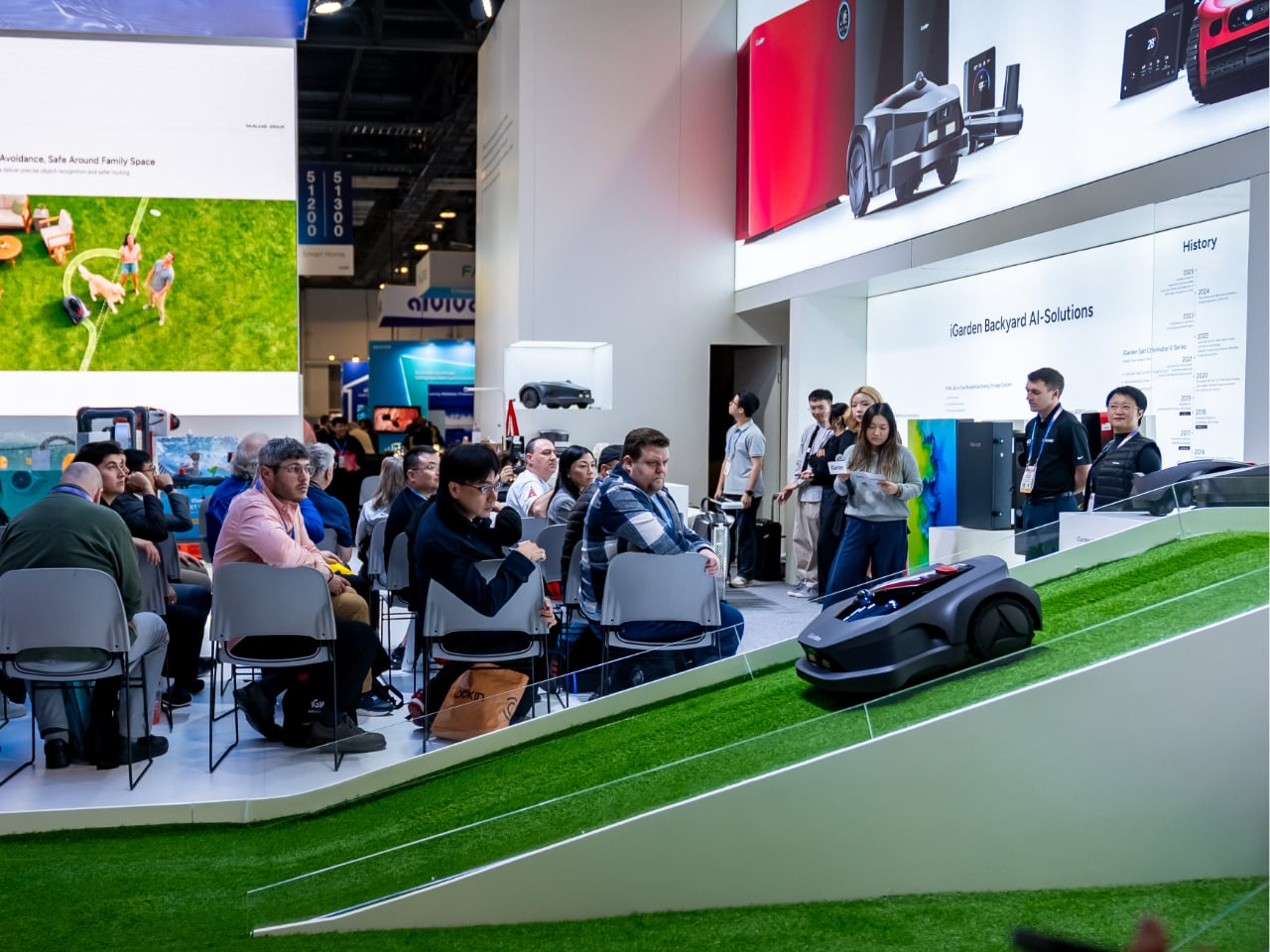
iGarden’s L and L AWD Series also claimed a CES Innovation Award. The lineup uses a wire free setup that does not require perimeter wires or an RTK antenna, pairing 3D LiDAR, IMU, and a 1080p camera for navigation. The AWD variants are built for steeper yards, while standard models target more moderate slopes. The guide still needs more clarity on US availability, support, and pricing before it moves from interesting to safe buy.
Airseekers positioned the Tron Ultra as a Best of CES contender. The headline feature is FlowCut 2.0, a system that cuts, holds, mulches, and distributes grass clippings as natural fertilizer, claiming to reduce fertilizer needs by 30 percent. The 14.5 inch cutting deck with adjustable heights from 30 to 50 millimeters handles serious mowing duties.
AirVision 2 AI Navigation deploys a 300 degree sensor suite with a beacon system that addresses signal dead zones that can plague pure GPS mowers. Independent wheel rotation enables tight cornering. Swappable batteries allow continuous operation on large lawns without waiting for recharge cycles.
Pricing lands around 3,000 dollars when the Tron Ultra hits Kickstarter in April 2026.
Specialized Solutions: Commercial, Modular, and Unique ApproachesPandag’s G1 Autonomous Mower scales robotic lawn care to enterprise levels. Rated for 12 acres per day with RTK navigation and 4WD, the G1 targets commercial properties, golf courses, and municipal applications rather than residential buyers. Pandag submitted the G1 for Best of CES Award consideration, and the coverage rate alone separates it from everything else announced at CES.
Yarbo’s M Series takes a different approach. Rather than building a dedicated mower, Yarbo created a 36V modular platform with a tracked chassis and 6 TOPS AI chip handling navigation. The core robot accepts swap on modules for mowing, snow clearing, leaf collection, and edge trimming.
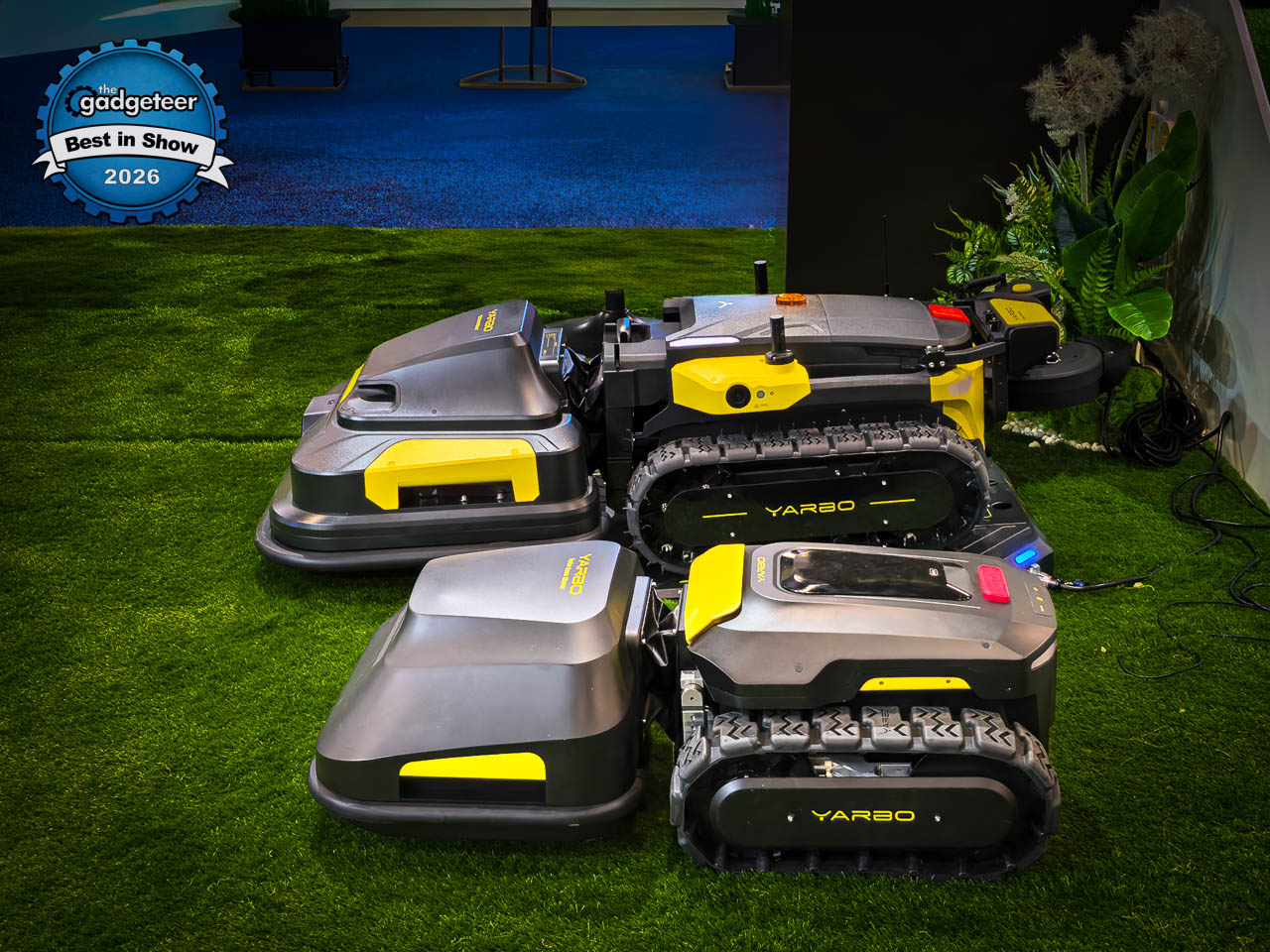
The mowing configuration delivers a 15.7 inch cutting width with adjustable height from 1.2 to 4 inches. The 10Ah battery version covers 0.1 acres per charge using disc blades. The 20Ah version doubles coverage to 0.2 acres and switches to straight blades for cleaner cuts on thicker grass. The tracked drivetrain handles 70 percent slopes, operates in temperatures from minus 13 degrees Fahrenheit to 113 degrees Fahrenheit, and carries an IPX6 water resistance rating.
The snow module uses a 25.6 inch plow blade covering 2,000 to 4,000 square feet per charge. The leaf collector handles wet leaves, pine needles, and small twigs with 25 liter capacity and hands free auto dumping. The edge trimmer uses a dual line system with automatic line feeding.
Yarbo launches on Kickstarter after CES with pre orders opening February 2026. Find them at Booth 51232 in the Venetian Expo with a product launch event on January 6 at 2:00 PM.
GOKO’s M6 arrives with a Cybertruck inspired design. The RTK plus VSLAM navigation combination adds visual simultaneous localization and mapping to satellite positioning, improving obstacle recognition and path planning in complex yards. 4WD handles steep and uneven landscapes. Wire free installation rounds out a spec sheet that competes directly with flagship models.
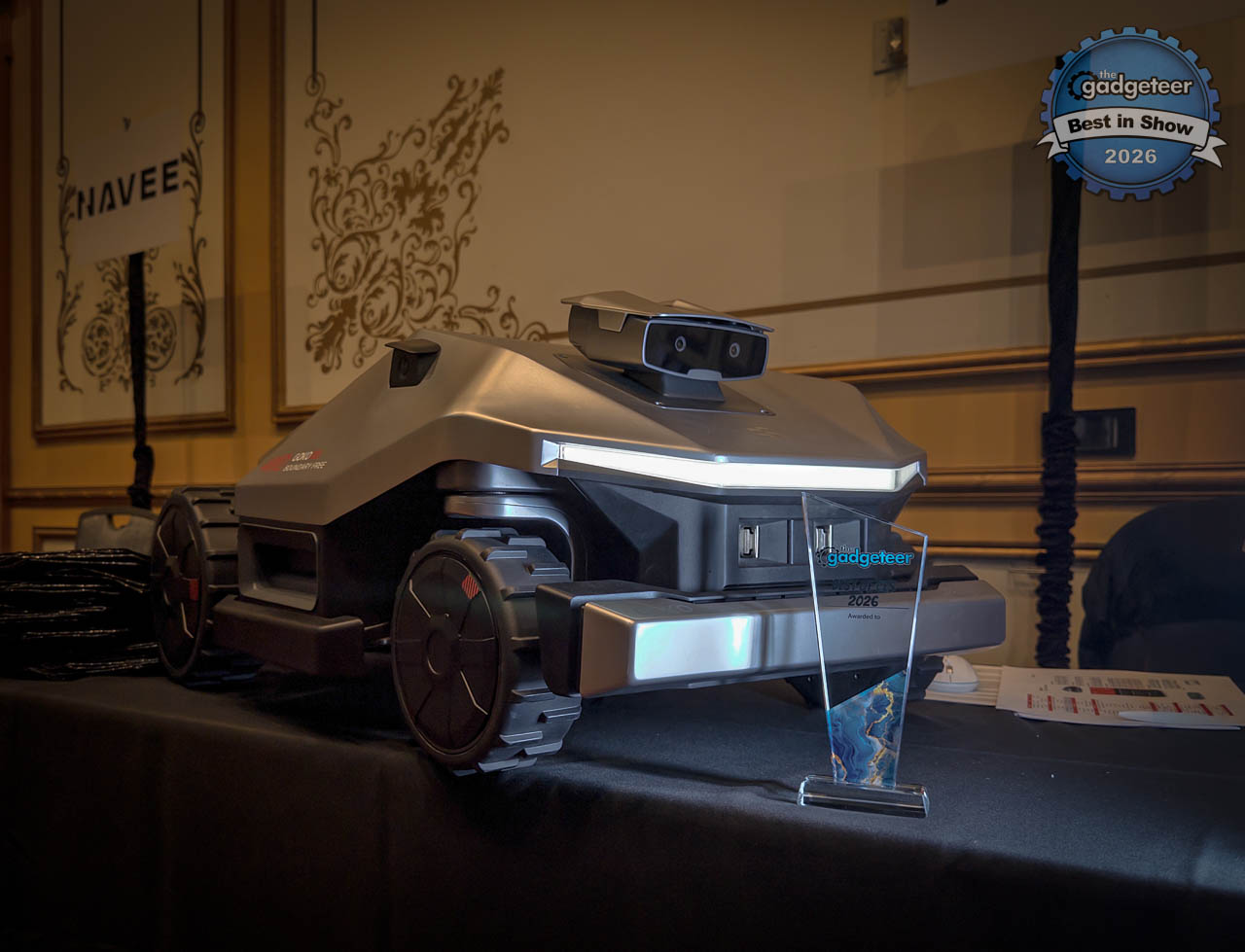
Lymow’s One Plus stands apart with a grass lift airflow system using SK5 blades that lifts grass before cutting for improved cut quality. The system doubles as a blower function. Weather resilient sensors and improved obstacle avoidance round out a vision based navigation approach that works without RTK infrastructure.
Sunseeker showcased a robotic mower lineup at Pepcom, though detailed specifications remain unavailable. The appearance signals intent to compete in the category, but meaningful evaluation will have to wait for fuller product announcements.
Navigation Technology: What Actually MattersThe navigation systems announced at CES 2026 cluster into clear tiers. RTK plus vision represents the premium configuration, appearing in flagships from NexLawn, Segway, and others. This combination uses satellite positioning for broad accuracy and computer vision for obstacle detection and fine navigation. The result handles complex yards without perimeter wire and recovers when GPS signals degrade.
LiDAR based navigation appears in more affordable models, offering strong obstacle detection and mapping without satellite dependency. The trade off typically involves more limited coverage area and potentially slower initial mapping compared to RTK systems. For smaller yards or properties with good line of sight characteristics, LiDAR delivers strong value.
Pure vision based systems like those in the NexLawn Master X Concept and Lymow One Plus rely entirely on camera based navigation. These systems can work without external positioning infrastructure, but real world performance depends on lighting conditions and visual complexity.
Drivetrain Decisions: AWD, 4WD, and RWDAll wheel drive and four wheel drive systems dominated CES announcements, reflecting manufacturer recognition that flat, uniform lawns represent only a fraction of potential customers. AWD configurations appeared across price points, from budget options like the Segway i2 AWD to flagships like the NexLawn NAVIA 6000 AWD.
The distinction between AWD and 4WD often comes down to marketing terminology, though some manufacturers use 4WD specifically for systems with independent wheel control. Segway’s X4 Series claims 84 percent slope capability, which would likely require genuine independent wheel management rather than simple all wheel power distribution.
Rear wheel drive remains viable for smaller, flatter properties. The Lymow One Plus, Roborock RockMow X1, and Segway i2 LiDAR all use RWD configurations, keeping costs lower while accepting terrain limitations.
Confirmed Pricing (So You Can Skip the Guesswork)Confirmed prices right now:
- Segway Navimow i2 AWD: 999 dollars (i 206), 1,299 dollars (i 210)
- Segway Navimow X4 Series: 2,499 dollars (X430), 2,999 dollars (X450)
- NexLawn NAVIA 6000 AWD: 3,999 dollars
Everything else in this guide is still TBD, or based on early estimates, until brands publish full retail pricing.
What to Watch ForThe commercial segment continues expanding, with Segway’s Terranox and Pandag’s G1 both targeting professional applications. That growth suggests robotic mower technology has matured enough to handle commercial reliability requirements, which should trickle down into improved durability for residential models over time.
Smart home integration appears across multiple lineups now. Segway includes Amazon Alexa and Google Home support across all series. Expect competitors to match this quickly.
The automatic gate systems demoed by Segway point toward a future where mowers navigate entire properties without human intervention to open gates between front and back yards, a quality of life improvement for split property homeowners.
Before You Buy: Questions to AskBefore committing to any robotic mower from this year’s CES announcements, work through these decision points:
About Your Property- Does my yard have significant tree cover that could block GPS signals?
- What is my actual slope percentage? A 45 percent slope is steeper than most people realize.
- Do I need the mower to cross driveways or pass between fenced areas?
- How complex are my property boundaries and obstacle layouts?
- Does this model require an RTK base station or antenna installation?
- What is the actual setup process and time commitment?
- Can it handle my tree cover and lighting conditions?
- What is the warranty and support channel? Retail versus direct versus crowdfunded.
- Is this a shipping product or a CES announcement?
- If crowdfunded, what is the company’s track record on delivery?
- Are reviews from real users available yet?
- CES specs are marketing claims. Real world performance data comes later.
- Up to coverage numbers assume ideal conditions.
- Slope percentages can be measured differently by different brands.
- First year products often get firmware updates that matter.
- Segway i2 series (shipping, retail distribution at Lowe’s, proven brand)
- Segway X4 and H2 series (pre orders opening, established company)
- Any model with confirmed retail availability and user reviews
- NexLawn lineup (new brand, no pricing, Spring 2026 expected)
- GOKO M6 (no pricing or firm availability)
- Roborock RockMow X1 (award winner but limited details)
- iGarden L series (award winner but limited distribution info)
- Lymow One Plus (vision only navigation still maturing)
- Airseekers Tron Ultra (Kickstarter April 2026, about 3,000 dollars)
- Yarbo M Series (Kickstarter, modular platform is ambitious)
- Any model without confirmed pricing or shipping dates
- NexLawn Master X (concept only)
- Sunseeker lineup (no specs available)
- Any product where you cannot verify the company’s support infrastructure
This guide will be updated as pricing, availability, and real world reviews emerge. For the full database of all 17 models with detailed specifications, see the reference database above.